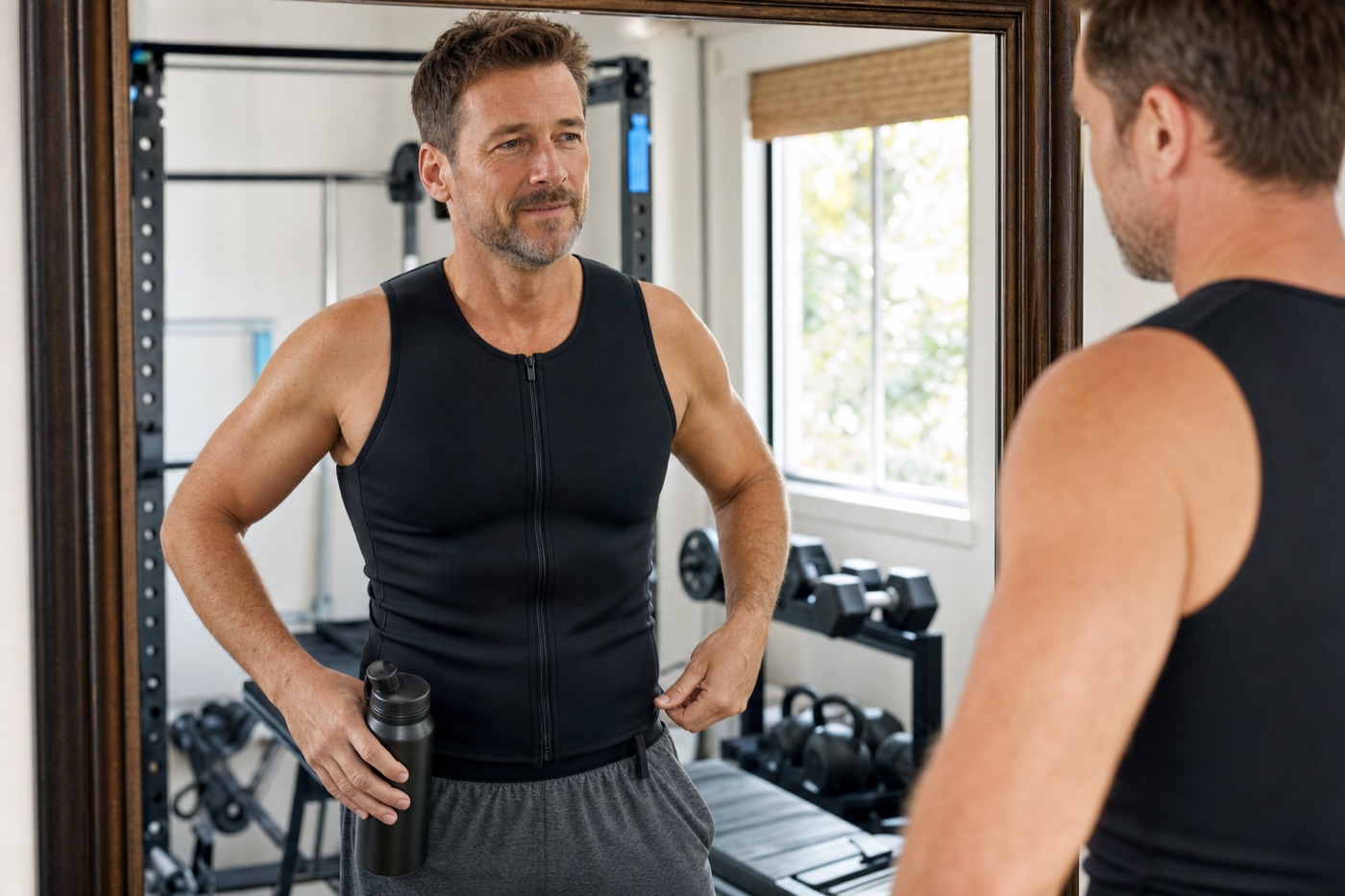
Compression is one of the most common features in sauna vests. It can make the garment feel secure and give the torso a smoother, more supported feel. But compression is not a synonym for fat loss, and a tighter vest is not automatically a better vest.
What compression means in clothing
A compression garment applies pressure through stretch and patterning. The pressure may be light, moderate, or firm, and it can vary across the body. In a sauna vest, the goal is usually a close fit around the torso rather than medical compression used for a specific condition.
Close fit can reduce shifting, bunching, and air gaps. That matters because a loose garment may let heat escape and become distracting during movement.
The benefits people notice first
The most immediate benefit is often practical: the vest stays put. Many people also like the feeling of gentle support around the midsection and the smoother look under a shirt. Those are real comfort and confidence benefits, even though they are not the same as a physiological performance boost.
A close garment can also make the heat effect feel more even. That is not a guarantee. Fit, fabric, and body shape still matter, but it is one reason vest design is more than a fashion choice.
What the research says about performance
Compression-garment research is broad and inconsistent. Studies differ in garment pressure, body area, exercise type, timing, and participant training level. Some find small changes in perceived soreness or recovery. Others find no meaningful improvement in running performance or time to exhaustion.
The most honest conclusion is that compression may help some people feel better supported or recover better, but it is not a dependable way to become faster, burn more fat, or replace training. The garment still has to fit without restricting breathing or movement.
Compression plus heat is a bigger stress
Heat-trapping fabric and compression are separate features, but they stack in the same garment. If the vest is too tight, too thick, or worn too long, the workout can become uncomfortable quickly. A snug fit is useful; a crushing fit is not.
You should be able to take a full breath, move your arms freely, and remove the vest without a struggle. If the garment leaves numbness, tingling, sharp pressure, or skin irritation, it is not a good fit.
How to shop for a better fit
Use the brand's chest, waist, height, and weight measurements instead of guessing from your normal T-shirt size. Look for stretch panels, a stable waistband, a zipper you can operate easily, and seams that do not land directly in high-friction areas.
For everyday users, the best compression vest is usually the one you can wear for a short session and wash without drama. A dramatic silhouette is optional. Comfort is not.
Pressure is not the same as support
A snug garment can feel supportive because it reduces movement between fabric and skin. That is different from medical compression, which is prescribed for particular circulation or swelling needs. It is also different from adding strength to a muscle. A close vest may improve the experience without changing the underlying workout in a meaningful way.
This is where marketing language can blur the lines. Words such as sculpt, activate, tone, and boost often describe a sensation or appearance, not a demonstrated change in energy expenditure. The science is more modest: compression research is mixed, and study results depend heavily on garment design, body area, exercise, and timing.
The two-minute fit check
Before a real session, stand, sit, raise both arms, rotate your torso, and take several comfortable breaths. The zipper should not dig into your chest. The underarm should not rub. The waistband should stay in place without rolling or pinching. If you cannot do those movements easily, a tighter size is not the solution.
A small but important detail is pressure distribution. A garment that is tight at one seam and loose everywhere else may feel worse than a garment with slightly less overall compression but a better pattern. For most people, even contact and easy breathing are more useful than maximum squeeze.
Takeaway: Compression is mainly about fit, support, and how the garment feels. Research on performance and recovery is mixed, so buy for a comfortable fit rather than a promise of extra calorie burn.