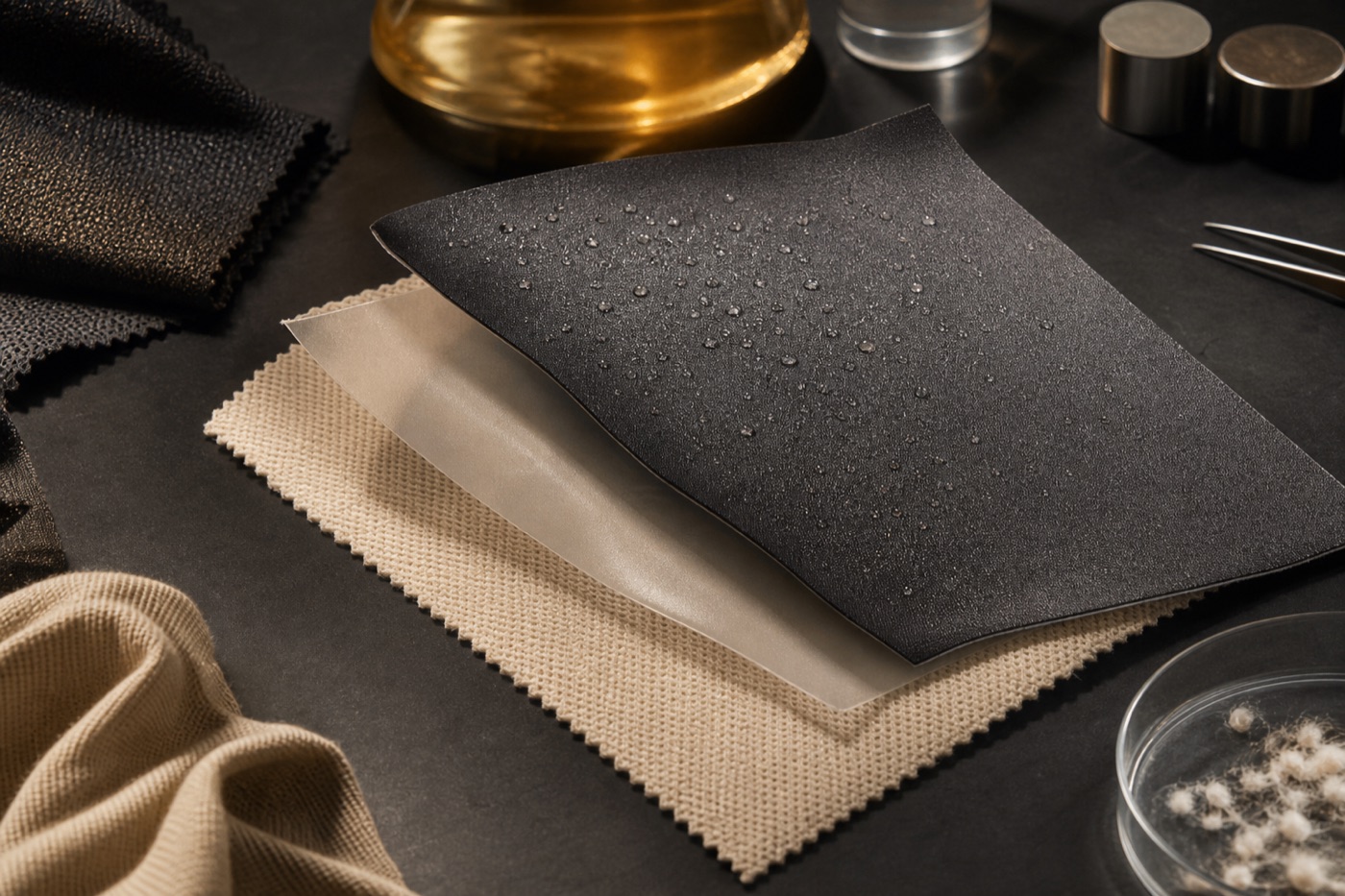
“Polymer fabric” sounds technical, but it is not a complete material specification. Polymer is the broad family that includes many synthetic materials used in clothing, coatings, films, elastics, and foams. Two products can both say polymer and feel completely different.
Polymer is a category, not a recipe
A polymer is a long chain of repeating molecules. Polyester, nylon, polyurethane, elastane, PVC, and synthetic rubber are all polymers, but they do different jobs. Some are fibers. Some are films. Some are coatings applied to another fabric.
That is why a product description that only says “heat-trapping polymer” leaves important questions unanswered. The useful follow-up is the full composition: what is the base fabric, what is the inner layer, and what creates the heat-retaining effect?
How polymer layers affect sweat
A dense film or coating can slow the movement of air and water vapor. That can keep more warmth close to the body and make sweat feel more noticeable. A different polymer treatment may be designed to move moisture away or let more vapor escape.
This is not a contradiction. “Polymer” does not automatically mean breathable or non-breathable. The structure of the finished fabric. Thickness, porosity, coating, knit, seams, and fit. Controls the experience.
Why some vest brands use polymer plus compression
A vest can combine a stretch fabric that hugs the torso with a more heat-retaining inner surface. The compression helps the garment stay put. The heat-trapping layer changes the microclimate next to the skin. These are two separate functions working together.
Sweat Shaper, for example, describes its system as performance compression plus a heat-trapping polymer fabric, with an anti-slip waistband and machine-washable construction. Those are brand claims, so shoppers should still check the actual care label, composition, sizing, and return policy before buying.
What to look for on the product page
Look for a real fiber breakdown rather than a phrase like “advanced technology.” Check whether the garment is meant to be worn directly on skin or over a base layer. Search for washing instructions, odor guidance, size measurements, seam photos, and any ventilation zones.
Also look for honest limits. A good product page should explain that sweating is not the same as fat loss and that heat-trapping garments require caution. If the only promise is “burn fat faster,” keep looking.
Polymer wear is about feel as much as science
Many people prefer polymer-based vests because they are lighter and less bulky than thick neoprene. Others prefer neoprene because it feels structured and substantial. Neither preference is wrong.
The best material is the one that lets you complete a sensible session, clean the garment afterward, and use it again without dread. Consistency beats a dramatic first workout.
Coating, film, laminate, or fiber?
When a brand says polymer, ask where the polymer lives. A polyurethane coating may sit on the outside of a woven fabric. A film may be laminated between layers. Elastane may be the stretch fiber that gives the garment its close fit. PVC or synthetic rubber may act as a barrier. These are different jobs with different effects on weight, feel, moisture, and cleanup.
This distinction is useful because a fabric can be water-resistant yet still pass some water vapor, or it can block both liquid and vapor. The finished result depends on porosity, thickness, temperature, pressure, and the way the layers are bonded. A single word on a product page cannot tell the whole story.
A simple spec-sheet reading order
Start with the fiber composition. Then look for the garment's intended base layer, wash instructions, stretch direction, and any ventilation panels. After that, check whether the brand gives real measurements or only a generic size chart. Finally, separate a lab property from a health claim: a coating can change air or vapor movement, but it cannot promise a certain amount of fat loss.
Textile researchers often measure air permeability, water-vapor resistance, thermal resistance, and liquid-water behavior separately. That vocabulary gives shoppers a better lens: ask which property the garment is optimizing, and what it may be sacrificing to do so.
Takeaway: Ask what the polymer is doing in the garment: coating, film, elastic fiber, lining, or performance finish. Then ask how the fabric manages heat, moisture, stretch, smell, washing, and skin comfort.