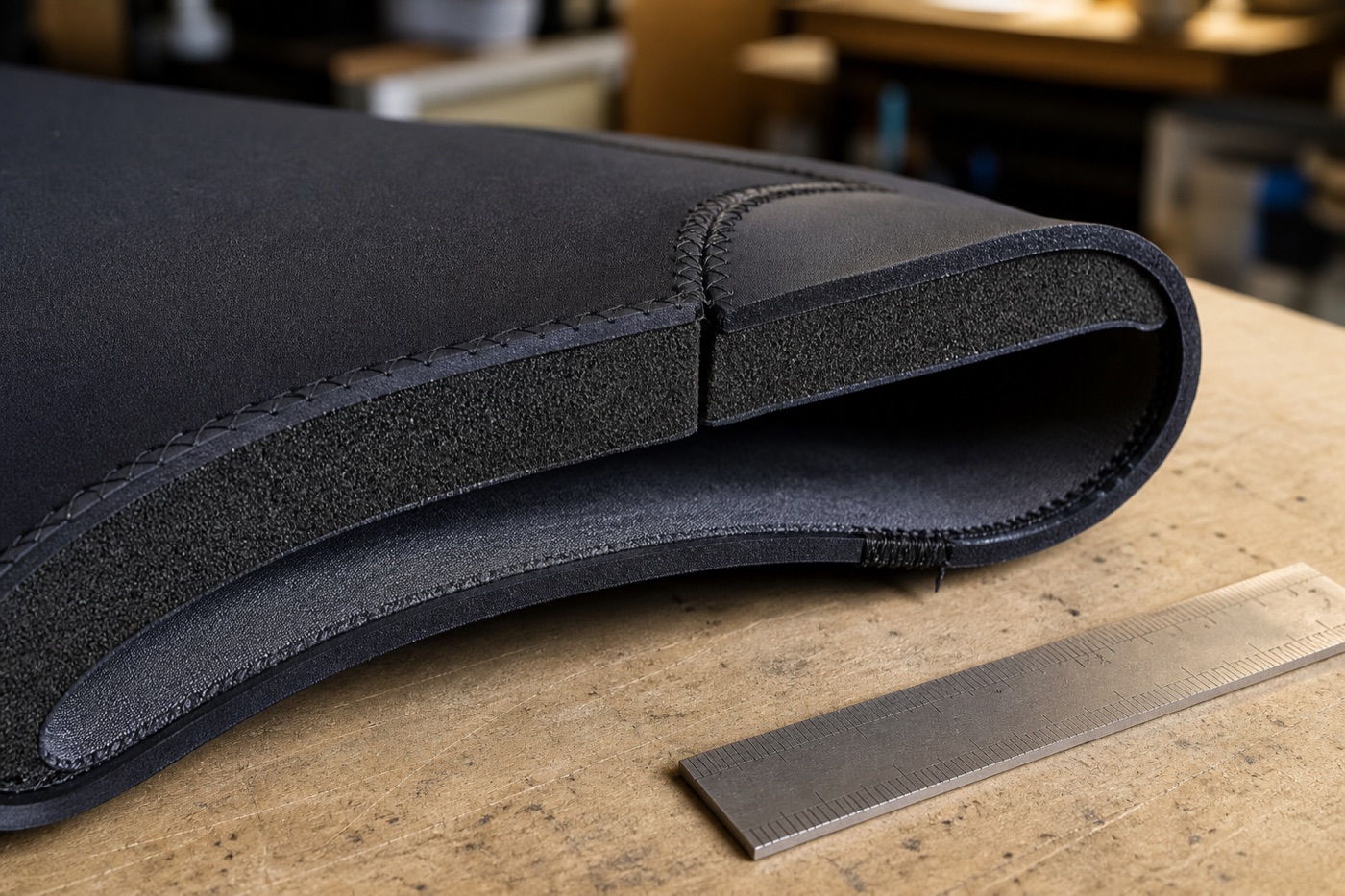
Neoprene is one of the most common materials in higher-end sauna wear. It is also one of the most misunderstood. Shoppers hear “neoprene” and assume every garment will feel the same. It will not. Thickness, lining, stretch, seam construction, and the cut of the garment all matter.
What neoprene is
Neoprene is a trade name commonly used for chloroprene rubber. In apparel, it is often made as a foam sheet with many tiny closed cells. Those cells help the material hold its shape, resist water absorption, and slow heat movement.
The same basic family of material is used in wetsuits, braces, protective gear, and industrial products. A sauna garment is not automatically the same as a wetsuit: the thickness, face fabric, seams, and pattern can be completely different.
Why it traps heat
Closed-cell foam contains pockets of gas that act as insulation. Add a close fit and a smooth outer face, and less air moves across the skin. During exercise, that can make the torso feel warmer sooner than a loose shirt.
Insulation is also the tradeoff. A material that holds heat well can make it harder to cool down. That is why ventilation, session length, and your own heat tolerance matter as much as thermal performance.
Neoprene versus PVC and coated nylon
PVC is usually the least expensive choice. It can create a strong sweat effect, but it may feel stiff, noisy, and less forgiving around seams and movement. Coated nylon or polyester can feel lighter and quieter, especially when designed with a little air or vapor management.
Neoprene often wins on stretch, structure, and resistance to tearing. It can also be warmer, heavier, and more expensive. There is no single best material for every person; the right answer depends on whether you care most about price, coverage, range of motion, or repeated hard use.
Thickness is not a simple score
Thicker usually means more insulation, but it can also mean more weight, more heat, and less natural movement. A thin, well-cut garment may be easier to use consistently than a thick one that turns every session into a struggle.
Look for the complete construction: stretch direction, lining, flat seams, elastic edges, zipper quality, and how the garment sits at the underarm and waist. Those details determine whether the material helps or annoys you.
How to make neoprene last
Follow the label, rinse sweat out promptly, and let the garment dry fully before storing it. Avoid high heat from a dryer unless the manufacturer specifically permits it. Do not fold a damp garment into a gym bag for days.
Some people are sensitive to rubber additives or adhesives. If you develop a rash, burning, or unusual skin irritation, stop using the garment and get medical advice. More heat is never worth an injured skin barrier.
Closed-cell foam is a structure, not a comfort guarantee
The tiny cells inside neoprene help it insulate, but they do not tell you how the finished garment will feel. A laminated face fabric can make the outside smoother. A jersey lining can make the inside friendlier to skin. Glue, thread, edge binding, and seam placement can change durability and irritation more than the foam alone.
A useful analogy is a work boot. The rubber matters, but so do the insole, stitching, heel, and how the boot bends. Two garments can share the word neoprene while one feels flexible and quiet and the other feels stiff and sweaty at the underarms.
The material test most shoppers skip
Look at the edge of the product photo. If the maker shows the cut edge, lining, and seam, you can learn more than from a long list of technology names. You are looking for a clean bond, even thickness, no exposed foam at high-friction points, and enough stretch that you can take a full breath and reach overhead.
One useful research detail is that closed-cell polychloroprene foam can be engineered for very low thermal conductivity. That explains why neoprene is good at holding warmth; it does not prove that every neoprene sauna suit is equally warm, safe, or well made. Construction still wins.
Takeaway: Neoprene is a flexible, insulating synthetic rubber. It can be durable and comfortable, but it is still a warm layer with limited breathability. A good fit matters more than the word on the label.