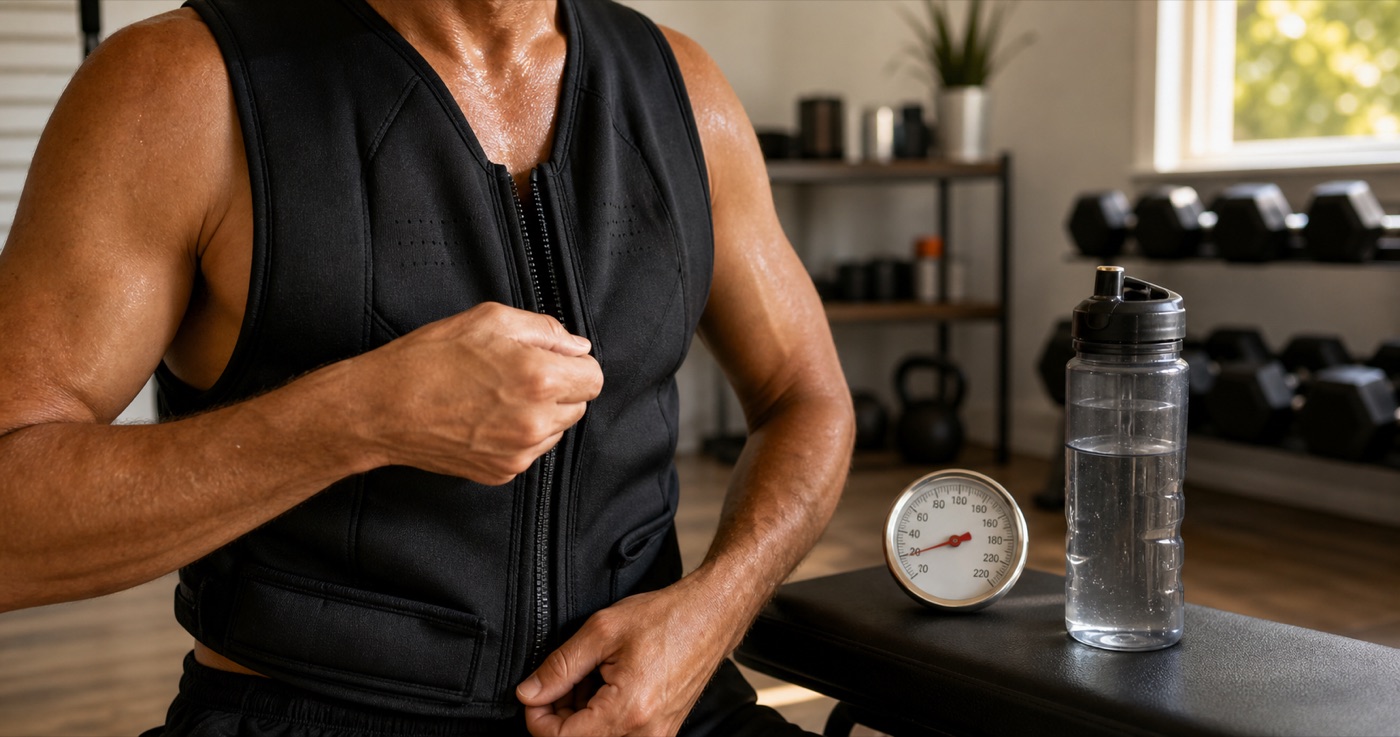
If you have ever put on a sauna suit and started sweating before your workout really got going, you have felt the basic idea. The garment slows the escape of body heat. Your body responds by sweating more. That is the useful part of the story, and also where a lot of marketing gets ahead of the facts.
Your body is always trying to cool itself
During exercise, your muscles create heat. Your body sends more blood toward the skin and produces sweat so that evaporation can carry heat away. In normal conditions, airflow and breathable clothing help that process work.
The moment you add a heat-trapping layer, you change the small climate around your skin. Heat and moisture build up faster. You feel warmer, your heart works harder, and sweat starts earlier or comes more quickly.
What the suit actually changes
A sauna suit does not add a special fat-burning chemical to your workout. Its main job is physical: it adds insulation and limits airflow. Materials vary, but the goal is the same. Keep more of the heat generated by movement close to the body.
A vest affects the torso. A jacket and pants set covers more of the body. A neoprene garment may feel thicker and more flexible, while a coated nylon or polymer layer may feel lighter and more shell-like. Coverage changes the experience, so a vest and a full suit should not be compared as if they were the same product.
Why the scale drops quickly
Sweat is water plus electrolytes and other small amounts of dissolved material. If you weigh yourself before and after a hot, sweaty session, the difference mostly reflects fluid leaving your body. Drink and eat normally afterward and much of that weight comes back.
That is why the World Boxing Council describes sauna-suit weight loss as temporary dehydration rather than permanent fat loss. Long-term fat loss still comes from a sustainable energy deficit, regular movement, food choices, sleep, and time.
Where sauna wear may fit
Some people use a heat-trapping layer during a short, easy walk or warm-up. Endurance athletes may study heat acclimation. Combat-sport athletes may have weight-class rules, although rapid dehydration is a high-risk practice and should never be improvised.
For everyday users, the best reason to buy one is simple: you like the feel of a hotter session and can use it conservatively. If the layer makes you feel sick, panicked, faint, or unusually weak, it is not the right tool for that workout.
A sensible first session
Start with a short, low-intensity session in a cool, familiar place. Keep water nearby. Do not combine the suit with a hot room, extreme layers, alcohol, or a new high-intensity workout. Remove it at the first sign of dizziness, confusion, nausea, chills, headache, or unusual weakness.
Check the care label afterward. Sweat and salt are hard on fabric, zippers, seams, and elastics. A quick rinse and complete drying can make a bigger difference to the life of the garment than a more expensive logo.
The three knobs you can actually control
Think of a heat-trapping garment as turning three knobs at once: coverage, airflow, and workload. A vest changes the torso climate. A coated shell changes how much air and vapor move through the fabric. A harder workout creates more internal heat. When all three knobs go up together, the session can become much more stressful than the product photo suggests.
That is why a useful comparison asks what the garment adds to the workout, not just how much sweat it produces. More coverage may help someone who wants a short, controlled conditioning session. Less coverage may be the wiser choice for a longer walk, a humid day, or a person still learning how their body handles heat.
A better way to read a sweat session
Use the session to collect information, not to chase a dramatic scale change. Notice how quickly you warm up, whether your breathing stays normal, how your skin feels, and how long it takes to cool down afterward. A garment that makes a manageable session feel slightly warmer may be useful. One that leaves you wiped out for the rest of the day is giving you a warning, not a better result.
The less-known point is that heat stress is shaped by the whole environment. Air movement, humidity, clothing, sleep, medication, recent illness, and the amount of work all matter. NIOSH specifically treats protective clothing as an added heat-load factor, which is a useful reality check for any sauna-suit claim.
Takeaway: A sauna suit can make exercise hotter and sweatier. The quick drop on the scale is mostly fluid, not body fat. Treat it as a training layer, not a fat-loss machine.