The first session in heat-trapping clothing can feel dramatic. The more useful question is what happens after a few weeks of sensible use. The answer is less flashy: you may become more comfortable with heat, more aware of how your body responds, and more disciplined about recovery. You may also discover that the garment is not a fit for your routine.
The body can adapt. Within limits
Repeated heat exposure can produce heat-acclimation changes such as earlier sweating and lower cardiovascular strain at a similar workload. These adaptations are useful when the person actually needs to perform in heat.
The body also needs time to recover. Heat is another stressor layered on top of exercise, work, sleep, weather, and life. A person with a full-time job, a family, or an irregular schedule may gain more from a simple walking routine than from forcing extra heat into every workout.
The most realistic everyday benefit
For many people, the biggest benefit is not a special metabolic effect. It is learning how a garment fits into real life. A vest may work for a short walk, light cycling, or warm-up. A full suit may be better reserved for controlled sessions when you have time to cool down and wash it.
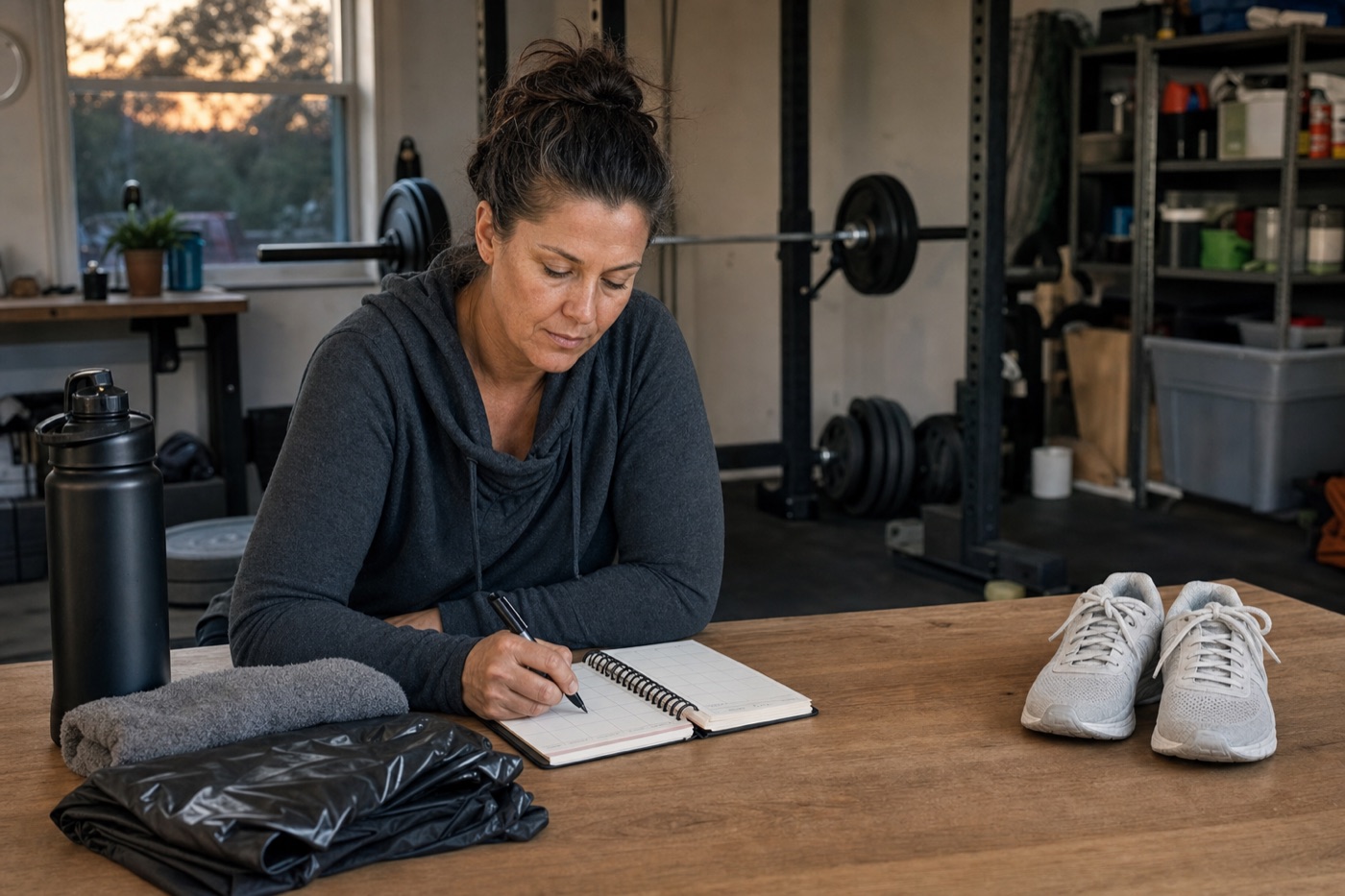
A repeatable routine makes it easier to notice useful signals: when you start sweating, how much water you need, whether the waistband chafes, and whether the garment helps or distracts from the workout.
What consistent use will not do
Regular sauna-wear use does not spot-reduce belly fat, detox the body, or guarantee permanent weight loss. Sweat on the inside of a garment is not a progress report. It is simply evidence that your body produced sweat.
Long-term results still come from the basics: the food you can sustain, the activity you can repeat, the strength you build, the sleep you protect, and the medical support you use when needed.
A simple routine that respects recovery
Keep heat-trapping sessions easy enough that you can speak in short sentences. Leave room for a normal cool-down, a meal, fluids, and sleep. If the next day's workout feels worse because of the suit, shorten or remove the heat layer.
Never use a sauna suit to hide a health problem, punish yourself for eating, or chase a number on the scale. If weight loss feels urgent or emotionally loaded, a doctor or registered dietitian can help you build a safer plan.
Care is part of the routine
Rinse sweat from the garment, wash it according to the label, and let it dry completely. Inspect seams, elastic, zippers, and inner surfaces. A garment that smells sour after cleaning, irritates your skin, or has damaged closures is not ready for another hard session.
The best sauna wear is not the piece that makes you sweat the most once. It is the piece that still feels comfortable, clean, and predictable after repeated use.
The boring variables that decide whether it works
A repeatable sauna-wear routine depends on small things: where you store the garment, whether it dries fully, whether the waistband chafes, whether you can wash it easily, and whether you still have enough energy for tomorrow. These are not glamorous product features, but they decide whether the layer becomes part of life or disappears into a drawer.
Track one or two simple signals for a few weeks: session length, effort, how quickly you cool down, and next-day recovery. Do not treat the amount of sweat as the score. If the same easy workout becomes more comfortable over time, that tells you more than a soaked shirt.
A four-week experiment without the drama
For a healthy adult who has no medical reason to avoid heat stress, a conservative experiment could keep the workout easy, use the garment only on selected days, and leave at least one normal-clothing session between heat sessions. The point is to compare how you feel, not to prove that you can tolerate more discomfort.
If sleep worsens, resting symptoms appear, recovery falls off, or the garment makes you dread movement, stop the experiment. NIOSH recommends more recovery time and more frequent breaks when protective clothing adds heat load. That principle applies to a garage gym just as much as it does to a job site.
Takeaway: Consistency can support heat tolerance and routine-building, but only when the sessions are short enough to recover from. More sweat is not automatically more progress.