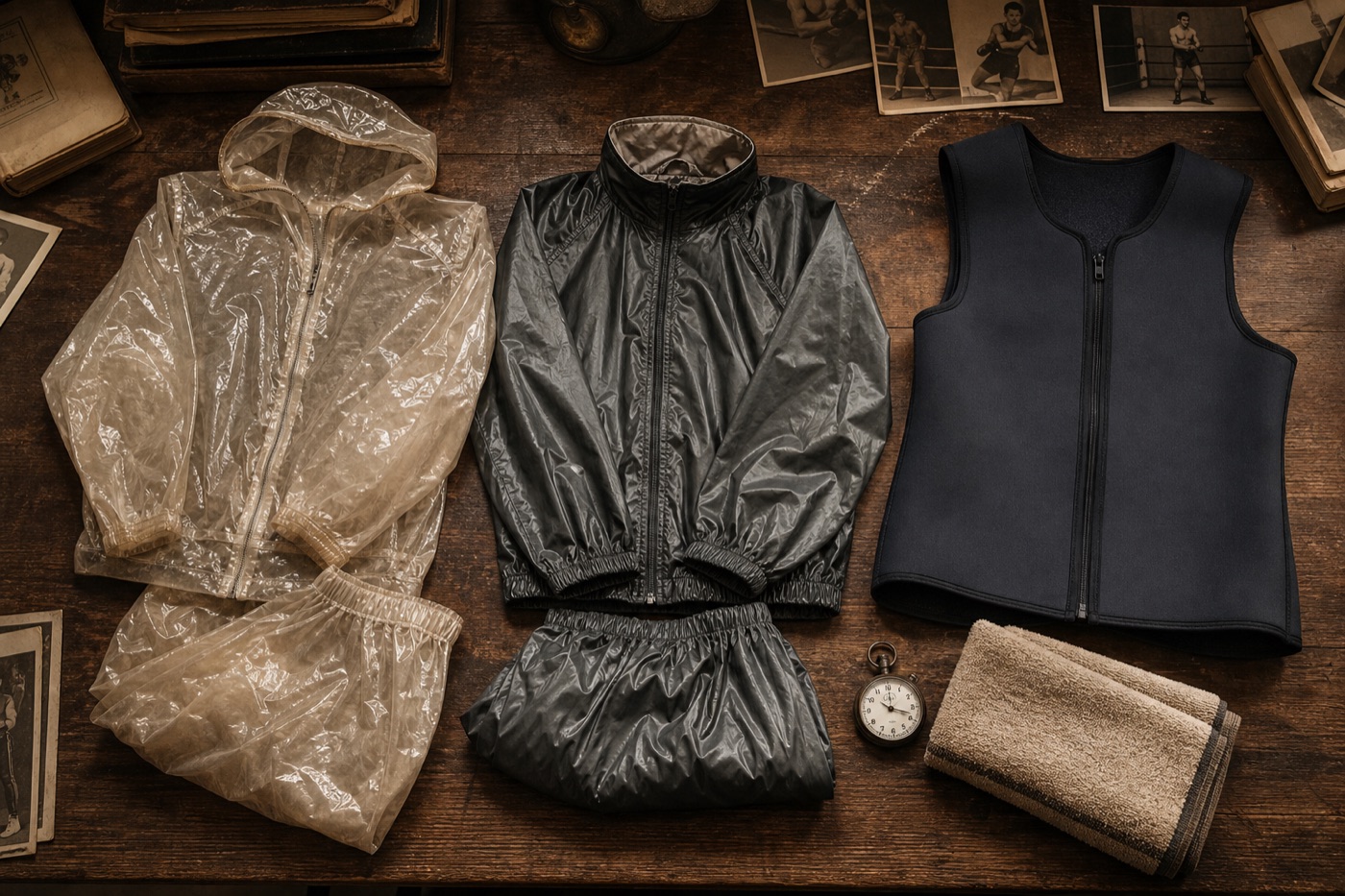
Sauna wear started with a blunt idea: cover the body, trap heat, and sweat. The category is still built on that simple mechanism, but the materials and the way people talk about the products have changed. The most important shift is from “more sweat at any cost” toward fit, comfort, repeat use, and safer heat management.
The early sweat-suit idea
Older sauna suits were often made from vapor-impermeable plastic, rubberized fabric, or coated nylon. They were inexpensive and effective at making sweat collect quickly, but they could be noisy, stiff, hot, and fragile at seams.
The design reflected the needs of weight-class sports and the marketing of quick slimming. Comfort and recovery were often treated as secondary concerns.
When sport began pushing back
By the late twentieth century, school and college sports were putting more limits around extreme weight loss. The 1997 collegiate wrestling deaths made the danger impossible to dismiss and led to major changes in weight-management practices.
That history is important for shoppers because it separates the legitimate use of a heat-training garment from the old idea that a person should simply suffer harder to reach a lower number.
The neoprene era
Neoprene brought more stretch, structure, and durability to the category. It could fit closer to the body than a loose plastic shell and work more naturally during movement. The closed-cell foam also helped insulate the body.
The tradeoff was cost and warmth. Neoprene often feels more substantial, can hold a lot of heat, and requires thoughtful care. Better materials did not erase the need for shorter sessions and sensible use.
Polymer and technical fabrics
Newer sauna vests often use a blend of stretch fibers, polymer films, coatings, and compression panels. The goal is to reduce bulk, improve comfort, and create a smoother layer under normal clothing.
Technical fabrics can be quieter and lighter than old PVC, and some are designed with more moisture or vapor management. But the word “technical” is not a safety certificate. The fabric composition, ventilation, fit, and care instructions still deserve scrutiny.
Where the category is going
The next generation of sauna wear will likely focus less on dramatic sweat claims and more on measurable fit, better sizing, easier washing, skin comfort, and heat monitoring. The strongest brands will explain what the garment is for, and what it is not for.
For shoppers, the best evolution is a change in mindset: buy sauna wear to support a controlled routine, not to prove how much discomfort you can tolerate.
Three design eras, three different tradeoffs
The old plastic shell optimized for one thing: fast sweat. The neoprene era added stretch, insulation, and a closer fit. Modern polymer and technical-fabric designs try to make the garment quieter, lighter, easier to wash, and more acceptable for repeat use. Each step solved a comfort problem while preserving the same basic heat-trapping tradeoff.
The category's history also mirrors a wider change in sports science. Early products were often sold with a simple visual promise: sweat equals slimming. Modern design is more interesting when it explains the actual mechanism and gives the user a safer way to control heat, coverage, and recovery.
What may come next
The next useful innovations are likely to be less theatrical: better size grading, pressure mapping, washable linings, seam durability, clearer fiber disclosure, and honest guidance about heat load. A temperature or moisture sensor could be helpful if it is used to encourage a break rather than to gamify suffering.
The creative opportunity for sauna wear is to become a better training companion. That means garments that show their work, make care simple, and respect the difference between an intentional heat-acclimation session and an unsafe attempt to force the scale down.
Takeaway: Modern sauna wear is more wearable than the old plastic suit, but the basic tradeoff remains: more heat retention also means more heat stress.